
Brendan Moran
Jul 2020
Papples is awesome. Really happy with how fast they were able to help.
Not a Call Center. A Team Member.
Most help desk outsourcing puts your tickets in a queue behind hundreds of other companies. We custom-recruit help desk professionals matched to your tech stack and embed them directly into your team - your Zendesk, your Slack, your standups. Whether you need internal employee support or customer-facing help desk coverage, you get your own dedicated support person. Faster resolution, deeper product knowledge, up to 70% less than in-house.
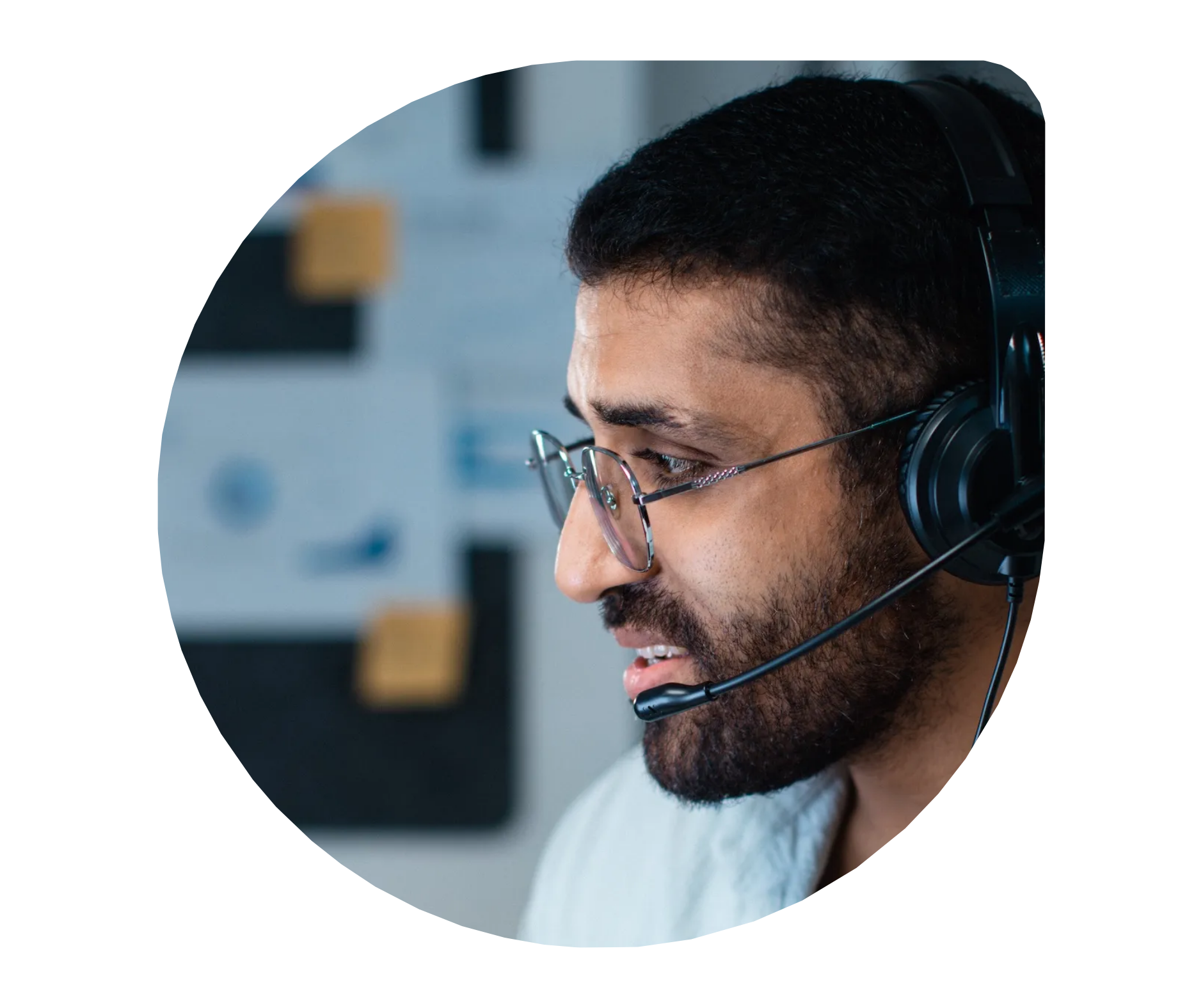








Help desk outsourcing usually describes hiring outside support capacity for troubleshooting, ticket management, incident resolution, and user support. But that does not have to mean handing your queue to a shared call center or replacing your internal team with a black-box vendor.
MyOutDesk uses a dedicated model: we custom-recruit one help desk professional for your role, then that person works inside your existing infrastructure. They operate in your ticketing platform, follow your escalation paths, and communicate inside your team's normal workflows.
The result is a more practical model for growing teams: dedicated support capacity, full visibility inside your systems, and a help desk professional who builds context and institutional knowledge over time.
Why Companies Are Switching
Traditional outsourcing sends your tickets to a shared pool of agents juggling dozens of clients. The result is predictable - and costly.
Each time a ticket gets reassigned, users lose context, resolution slows down, and the support experience gets worse. Repeated handoffs create unnecessary downtime and frustration.
Users expect support teams to understand their environment, history, and urgency. Shared pool agents juggling multiple clients have a much harder time delivering that level of context.
When users have to repeat the same issue across multiple contacts, satisfaction drops and resolution gets slower. Shared agents following generic playbooks escalate more and resolve less.
Your tickets go into a black box. You can't see who's handling what, how long it's taking, or why things are getting escalated.
In shared models, quality depends on which agent gets assigned - it's changing and unstable. You might get a great agent Monday and a terrible one Tuesday.
This is why more companies are moving away from shared help desk outsourcing toward a dedicated, directly integrated model.
THE DIRECT INTEGRATION MODEL
We find the right person - not from a generic candidate pool, but through a dedicated search built around your specific role.
They become your team - not a vendor behind a portal.
Unlike shared agents who rotate between clients, your dedicated support professional gets better every day.
Our dedicated help desk professionals handle support inquiries across every channel - phone, email, SMS, and chat. From internal employee support and user onboarding to customer-facing ticket management, issue resolution, and support metrics, they cover the full scope of frontline help desk work.
Because they integrate directly into your existing tools and processes, you can add support capacity without losing visibility or control. With the flexibility to add coverage for launches, seasonal spikes, or 24/7 operations, you can scale your help desk by person - not by contract tier.
WHO THIS IS FOR
This offer fits organizations that need real help desk capacity inside their own systems and workflows, but do not want a shared call center model.
For software companies that need frontline support professionals who can learn product workflows, manage ticket queues, document recurring issues, and route bugs cleanly to engineering.
For companies that need their own dedicated internal support person to handle employee support, onboarding and offboarding, password resets, device coordination, and day-to-day ticket coverage without losing control of systems or access policies.
For service providers that need overflow coverage, queue support, documentation help, or an additional dedicated technician who can operate inside PSA, RMM, and ticketing workflows.
For organizations with distributed employees, multiple offices, or expanding support hours that need more coverage, tighter process consistency, and better visibility across locations.
ONBOARDING & INTEGRATION
We do not force a rigid help desk package onto every client. The process is scoped around your environment, your support model, and how your team already operates.
Step 1
We start with discovery to understand your support volume, tools, escalation paths, coverage needs, and whether the role fits a standard profile or requires custom recruitment.
Step 2
We recruit around the role you actually need, not a template. You interview candidates, validate fit, and decide who joins your team.
Step 3
Once hired, we work with you on an onboarding plan. From there, you onboard the support professional the same way you would any other team member inside your organization.
Step 4
System access, permissions, and workflows follow your existing security policies. The support professional works inside your tools, your documentation, and your operating cadence.
Hiring can happen in as little as 7 days. The full onboarding timeline depends on your internal process, training requirements, and how quickly your team provisions access.
SUPPORT COVERAGE
| Tier | What It Covers | Your Dedicated Hire |
|---|---|---|
| Tier 0 - Self-Service | Knowledge base management, FAQ portals, chatbot configuration, proactive notifications | Fully manages - builds, maintains, and optimizes your self-service resources |
| Tier 1 - Basic Support | Password resets, account setup, software installation, connectivity troubleshooting, ticket triage | Fully handles - first point of contact, logs tickets, resolves via documented runbooks |
| Tier 2 - Advanced | Complex software issues, system configuration, SaaS troubleshooting, hardware diagnostics, escalation management | Handles with domain training - this is where the dedicated model excels over generic outsourcing |
| Tier 3 - Escalations & Systems Support | Root cause analysis, escalation ownership, MDM administration, endpoint policies, and vendor coordination | Coordinates complex issues, manages device and access workflows, documents resolution, and works with your internal IT leads |
~70%
of all incoming support queries are Tier 1. A dedicated support professional resolving these at first contact frees your engineering team to focus on strategic work.
Higher FCR
Well-defined support tiers improve first-contact resolution by routing issues to the right level faster, reducing unnecessary escalations, and giving your team clearer ownership.
Need dedicated Tier 2 or Tier 3 talent? These roles require custom sourcing. Talk to our enterprise recruitment team →
BEYOND BASIC L1
Some help desk roles don't fit in a standard catalog. Your SaaS product has edge cases no runbook covers. Your healthcare IT environment requires HIPAA compliance in every interaction. For roles like these, we run a dedicated recruitment search - not a template.
Support professionals who learn your product deeply enough to troubleshoot product-specific workflows, reproduce bugs, and communicate findings to engineering. Not just ticket takers - they understand your product the way a support engineer does.
Candidates with healthcare IT experience who can work within HIPAA-sensitive environments. Familiar with EHR/EMR platforms like Epic, Cerner, and Athenahealth. HIPAA training can be supported, but most clients should own the compliance onboarding process inside their organization.
L2 technicians experienced with RMM tools, PSA platforms, and multi-tenant environments. Can handle escalated incidents requiring in-depth diagnosis across varied client environments.
Provide first-line technical assistance to customers and internal users experiencing issues.
Keep support requests organized and prioritized so nothing falls through the cracks.
Diagnose and resolve common technical problems quickly to minimize downtime.
Help new users get up to speed quickly with guided setup and training support.
Build and maintain a self-service knowledge base that reduces ticket volume.
Ensure complex issues reach the right people quickly with structured escalation workflows.
COST COMPARISON
| In-House (US) | Shared Outsourcing | MyOutDesk Dedicated Professional | |
|---|---|---|---|
| Annual cost | $80K–$100K+ (salary + benefits + equipment + management) | Varies - per-ticket or per-agent billing | Up to 70% less than in-house |
| Operating model | $2,000–$5,000/yr (you manage) | Included (but generic) | Client Managed/Co-Managed |
| Turnover cost | $5,000–$7,500 per replacement | Provider absorbs | We rematch at no extra cost |
| Knowledge retention | High (if they stay) | Low - agents rotate | High - same person, your systems |
| Visibility | Full | Limited - black box | Full - works in your tools |
Don't compare cost-per-ticket. Compare total cost to resolve. A low sticker price means very little if tickets bounce between agents, require repeated follow-up, and keep users stuck longer than they should be.
INDUSTRY LANDSCAPE
Self-service, chat, and knowledge-centered support are taking more of the routine workload, while phone and email are increasingly reserved for more complex issues.
AI is being used to draft responses, surface knowledge articles, summarize tickets, and support agents in real time. Human judgment still matters for escalations, edge cases, and customer-specific context.
More companies are using outsourced support to extend internal IT teams, not replace them. Frontline support and systems work can sit with a dedicated hire while internal IT keeps ownership of strategy and high-risk decisions.
Better documentation, runbooks, and searchable knowledge bases are becoming core to faster resolution times, smoother onboarding, and more consistent support quality.
As remote support expands, buyers care more about access permissions, audit trails, endpoint policy enforcement, and MDM discipline inside their own tools and workflows.
RISK MITIGATION
| Risk | Traditional Outsourcing | Direct Integration Model |
|---|---|---|
| Data security | Data passes through shared agent pools and third-party systems | Your support professional works in your systems, under your security protocols. SOC 2 Type I certified. |
| Quality | Shared agents deliver minimum-SLA service, not brand-aligned support | Same person every day. They learn your standards, your voice, your users. |
| Communication | Language barriers, time zone lag, cultural disconnect | You select the support professional. We can recruit for the timezone coverage you need, and they work in your Slack, not behind a vendor portal. |
| Visibility | Tickets go into a black box | Full access - your ticketing system, your dashboards, your metrics. |
| Vendor lock-in | Knowledge lives in the vendor's system. Terminate the contract, lose the knowledge. | All documentation, runbooks, and ticket history stay in your tools. It's yours. |
| Scaling | Rigid contract tiers, minimum headcount commitments | Scale by person. Add one for a launch, adjust after Q4. No multi-year lock-in. |
Every MyOutDesk virtual professional operates within a security framework built for the world's most regulated industries. From SOC 2 certified operations to CIS Level 2 hardened devices, we go beyond industry standards.
Verified controls for enterprise security
MyOutDesk managed endpoints secured to CIS Benchmark standards
Safeguards for protected health information
Payment card data handled with certified controls
See the Difference
| Feature | Full-Time Hire | Freelancer / Marketplace | MyOutDesk |
|---|---|---|---|
| Time to hire | 4–8 weeks | 1–2 weeks | As little as 1 week |
| Screening | You run it | Self-reported | 6-stage vetting, 0.7% pass rate |
| Education | You verify | Unverified | College degree required |
| Dedicated to you | Yes | Rarely | Yes, full-time |
| Cost structure | Salary + benefits + overhead | Hourly, unpredictable | Flat monthly rate, all-inclusive |
| If it doesn't work out | Start over | Start over | We rematch at no extra cost |
| Oversight tools | You provide | None | Productivity tracking included |
| Legal entity (US & PH) | N/A | No | Yes |
| SOC 2 compliance | Your responsibility | No | Third-party audited |
| HIPAA verified | Your responsibility | No | Yes |
Brendan Moran
Papples is awesome. Really happy with how fast they were able to help.

Shawna Jones
MyOutDesk has consistently provided the talented leverage I need to grow my business in a scalable model. From the CEO to the placement team to virtual assistants, I have been impressed by their professionalism and desire to truly meet my needs!

Charles Benton
My experience with MOD has been great, they are very professional and helped me find a VA within a week.

HICKS CRAWFORD
I loved to utilized Myoutdesk services for real estate assistance. They invest a great deal of time and money into developing their Vas and it shows in the quality of work they perform for me. Most companies are not legal in the countries. They send work to and do not have the ability to protect their clients like MyOutDesk does.

Kari Wilbanks
everybody is wonderful and professional!!!

Dareika D. Morrison
As a small business owner, I could appreciate the seamless process with MOD. Their dedicated staff members coached me through the entire hiring process while recommending best practices for onboarding my VP. If you are considering hiring a virtual assistant, I highly recommend MOD! You won't be disappointed. Cheers to our success!

Jeremy Taylor
MyOutDesk is the best company out there. Hiring a VA is tough and finding a good one is almost impossible it seems sometimes. With MyOutDesks strict standards and pre screening you truly just have to find a fit for your company because the rest of the screening has been done for you. Highly recommend!!!

Dennis “Denny” Lee
Fantastic service and fantastic results so far. Chris has been great!

Zach Neumann
My out desk is a great company and Daphne is great to work with. I have many VAs and they are all great.

Yvette None (Vet)
I have been working with Chris for close to 6 months. Both management and employees have been super professional and always making the client number one in servicing their needs.
Tips, strategies, and insights to help you get the most from your help desk virtual assistant.

Net Promoter Score is the fastest pulse check on customer loyalty, but only if you pair it with qualitative feedback and smart timing. This guide shows you how to measure, benchmark, and act on NPS data for sustainable growth.
Discover how Business Process Outsourcing (BPO) is transforming professional services by enhancing efficiency, reducing costs, and driving growth. This article explores the strategic advantages of BPO, focusing on the specialized solutions provided by MyOutDesk, and how they help firms navigate today’s competitive landscape.
Outsourcing is no longer limited to basic administrative tasks. In this 2026 guide, explore 20 real-world examples of how businesses outsource roles across sales, marketing, customer service, and operations to improve efficiency and control costs.
Explore More
Not exactly what you need? These services pair well or cover similar tasks.
Omnichannel support & retention
Email, calendar & CRM management
Call handling, routing & scheduling
FAQ
Help desk outsourcing is the practice of partnering with an external provider to add technical support capacity without relying on a shared call center or building every role internally. It can cover Tier 0 through Tier 2 support across phone, email, chat, and self-service channels. MyOutDesk uses a dedicated model, so your support professional works in your systems and alongside your team instead of behind a vendor portal.
Shared outsourcing uses a pool of agents who rotate between multiple clients - your tickets compete for attention alongside other companies' workloads. Dedicated outsourcing assigns a specific person exclusively to your account. They learn your product, work in your tools, and build institutional knowledge over time. MyOutDesk uses a dedicated model - your support professional is custom-recruited for your role and integrates directly into your team.
A help desk focuses on resolving immediate technical issues - break/fix, troubleshooting, ticket management. A service desk has broader scope, encompassing incident management, change management, asset tracking, and IT service delivery aligned to frameworks like ITIL. MyOutDesk help desk professionals can support both functions depending on the complexity of the role.
In-house help desk agents cost $80K–$100K+ annually when you factor in salary, benefits, equipment, training, and management overhead. Shared outsourcing models typically use per-ticket, per-hour, or pooled-agent pricing. MyOutDesk's dedicated model costs up to 70% less than in-house hiring, with flat monthly pricing and no hidden fees.
Common risks include data security exposure, quality inconsistency, loss of visibility into ticket handling, and vendor lock-in. Most of these risks stem from the shared outsourcing model, where your data and tickets pass through rotating agent pools. A dedicated, directly integrated model - where your support professional works in your systems under your security protocols - mitigates these risks by keeping control, visibility, and knowledge inside your organization.
Our dedicated help desk professionals handle first-line technical support including ticket triage and resolution, troubleshooting common hardware and software issues, user onboarding and account setup, password resets, software installations, knowledge base maintenance, and escalation management.
Our help desk professionals have experience with popular platforms including Zendesk, Freshdesk, Jira Service Management, ServiceNow, HubSpot Service Hub, Intercom, and ConnectWise. They can also work with remote support tools like TeamViewer, AnyDesk, and LogMeIn. Access and permissions are always configured according to your existing security policies.
Yes. Your dedicated support professional can walk users through troubleshooting steps via phone, chat, or email, and use remote desktop tools to diagnose and resolve issues directly when needed.
Yes. Your dedicated help desk professional can set up new user accounts, configure email and software access, provision hardware, and walk new employees through your systems. For offboarding, they can revoke access, collect equipment records, and ensure proper handoffs.
We take data security seriously. All MyOutDesk support professionals go through thorough background checks, sign NDAs, and follow strict data handling protocols. Access permissions are managed by your team to ensure your systems stay secure.
All of our support professionals are dedicated to a single client. Your support professional will learn your systems, your internal tools, and your support processes to deliver consistent, reliable help desk support.
We can hire a help desk professional in as little as 7 days. The full onboarding timeline depends on your internal process, training requirements, and how quickly your team provisions access. We start by understanding your support volume, tools, and escalation paths so we can match the right person to the role.
Yes, we are happy to work with you to get an NDA between your support professional and your company signed. We also provide a default NDA that protects all our clients.
Yes. For roles that don't fit a standard template - SaaS product support, HIPAA-regulated healthcare IT, MSP L2/L3 technicians, or complex internal IT operations - we run a dedicated recruitment search through our enterprise custom recruitment program. We source from scratch based on your specific technical requirements, compliance needs, and product complexity.
Yes. Because our support professionals work dedicated schedules, you can staff coverage across time zones for extended or round-the-clock support. Many clients pair a daytime support professional with an after-hours teammate for full 24/7 coverage without the overhead of shift-based in-house teams.